

GovTech · Tax Portal · Code Enforcement
Nassau County, Florida
How a Coastal County Went From Unknown to 81% Short-Term Rental Tax Compliance in Its First Year
By Kandi Marler September 16, 2026 7 min read
Amelia Island anchors Nassau County, a historic coastal destination known for its Victorian architecture and resort-driven tourism. While Nassau remains a small jurisdiction with roughly 104,000 to 107,000 residents today, it supports a tourism economy that rivals much larger counties. The region is also among the fastest-growing in Florida, with the population projected to climb nearly 47% between 2025 and 2035. Facing the challenge of maintaining oversight across this surging market, the county partnered with Deckard Technologies in 2024 to modernize its compliance systems and better manage its tourism infrastructure.
A Different Kind of Compliance Problem
Jurisdictions track short-term rentals in different ways. Earlier in this series, we looked at Marion County, where operators must hold a county-issued license before they can legally function. Nassau County takes a different approach by using tax registration as its primary control mechanism. Every short-term rental on Amelia Island is expected to register for the Tourist Development Tax (TDT) with the Nassau County Tax Collector's Office, as this tax account is the primary way a property becomes visible to the county.
This distinction changes how the county measures compliance. In a jurisdiction driven by licensing, success is measured by the total number of permits issued. The Nassau County Tax Collector's Office, however, had to build visibility into a completely different system. Their challenge was not tracking permit numbers, but identifying exactly who is collecting the TDT and who is not.
From Unknown to 81% in Its First Year
When the county's contract began, there was no clear answer to a basic question: how many of Amelia Island's active rental listings were actually registered to pay the tax they owed? Every jurisdiction in this series starts there, before a system exists to connect what's actually operating on the ground to what the Tax Collector's Office has on file.
The first full quarter of data made that gap visible. Over the following twelve months, the county climbed from not knowing, which the data reflects as 0%, to 28% in the first quarter, edged up to 33% in the next, then jumped to 81% by the one-year mark (see Figure 1).
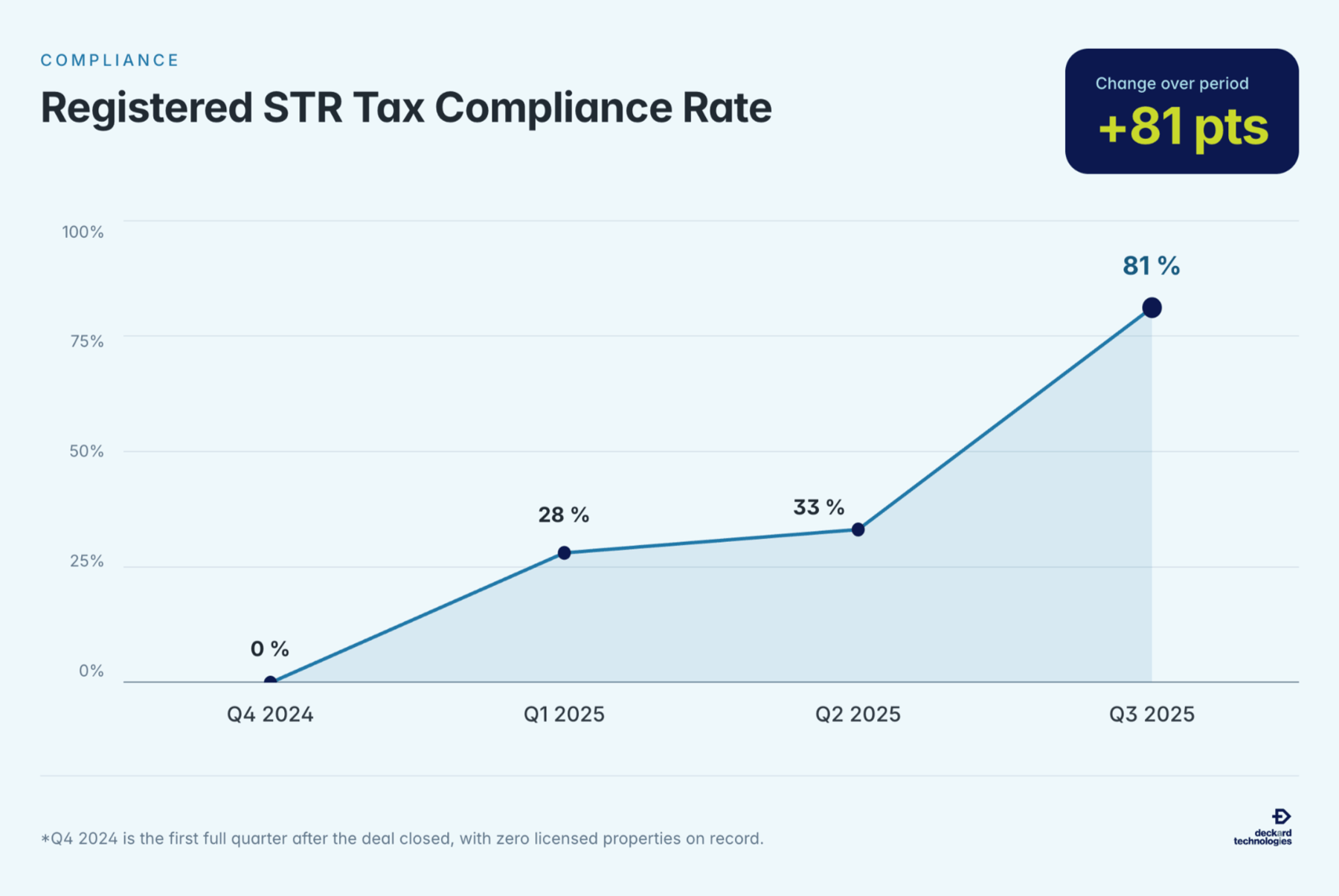
Figure 1: Registered STR Tax Compliance Rate by quarter. Source: Deckard Internal Documentation.
Moving Beyond the Surface: Data Reconciliation
Registration is the gate. Moving Nassau from 33% to 81% took more than finding brand-new properties. Much of the work was fixing matches that looked broken but weren't.
Some properties that appeared unregistered on paper were already paying the tax under a slightly different record. Usually, the mismatch came down to the parcel number, the county's official identifier for a piece of land, being recorded differently on one list than the other. The two records simply didn't recognize each other as the same property. That kind of mismatch shows up wherever registration records and listing data come from systems that were never built to talk to each other. Working through those discrepancies, list by list, was as much a part of reaching 81% as finding the properties that had genuinely never registered at all. Skip that step, and a county ends up spending its energy chasing owners who are already paying, while the properties that are truly avoiding the tax stay hidden behind the noise.
What the Registration Gap Actually Costs, and the Bigger Picture Across Florida
Every short-term rental that operates without registering is a property collecting rent from visitors without collecting the tax that funds Nassau County's tourism infrastructure. That gap is a direct revenue loss, and it's uneven too. A hotel on Amelia Island remits its lodging tax on every room, every night. An unregistered short-term rental down the street does not.
The mechanics make that gap easy to overlook if nobody's watching for it. In Nassau, collecting and remitting the TDT is the host's responsibility. Airbnb and Vrbo do not collect or remit it on the host's behalf here, so a host who doesn't register simply doesn't pay, and nothing in the booking flow catches it.
The tax itself has been built up over three decades of separate ordinances, which is part of why it can be confusing to newer operators:
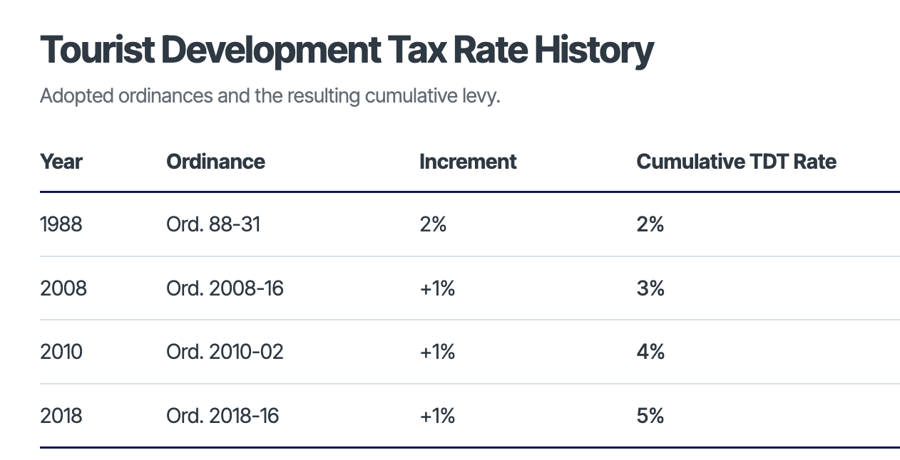
Figure 2: Tourist Development Tax rate by adopting ordinance. Sources: Nassau County Ordinance No. 2026-026; Nassau County TDC Infographic, January 2021.
The Tourist Development Tax (TDT) is a 5% tax on short-term rentals in Amelia Island, covering both the City of Fernandina Beach and the unincorporated areas of the island, rather than the rest of Nassau County. This scope is confirmed by the county ordinance itself. A separate Sales and Use Tax also applies on top of the TDT, not instead of it, and is remitted to the Florida Department of Revenue. The state rate is 6% statewide; combined with Nassau County's 1% discretionary surtax, Amelia Island hosts pay a combined 7% in sales tax, bringing the total tax burden on short-term rentals to 12%, which is not itself a statewide rate. Registration itself runs through the county's TouristExpress portal.
Nassau operates under the same statewide framework we covered in our introduction to this series: Florida limits what any county can regulate directly, leaving registration, taxes, and safety codes as a local government’s primary tools. With limited regulatory levers, tax revenue is where short-term rentals most affect the county's budget, which puts significant weight on property taxes. The county has cut its millage rate for six consecutive years, including the July 2026 budget announcement, leaving the county’s budget with very little margin. Against that backdrop, this November's Amendment 3 vote is a significant factor. The proposal would raise the Homestead Exemption and tighten the assessment growth cap on non-Homestead properties, which covers most short-term rentals. A more complete STR tax roll doesn’t eliminate that legislative risk. But it does change the county’s position: Nassau can now enter these fiscal changes knowing exactly how its rental market contributes to the tax base, rather than guessing.
More Compliance Stories Across Florida
Nassau's climb from unknown to 81% in a single year is one entry in a series covering seven Florida counties and cities where Rentalscape is active, introduced in our post on short-term rental compliance across Florida. Each county in the series started from a different baseline and a different regulatory structure.
|
If your jurisdiction is weighing how registration data, tax collection, and enforcement fit together, Rentalscape by Deckard Technologies is what gave Nassau that visibility. Get in touch to talk through what it could look like for your county. Book a Demo |
 LinkedIn
 Facebook
 X
X